
Insights

Charge Cards vs. Credit Cards: What's the Real Difference

They look identical in your wallet, but one expects to be paid in full each cycle and the other doesn't. That difference shapes how each one fits your life.

Michael Hartley·July 9, 2026·4 min read
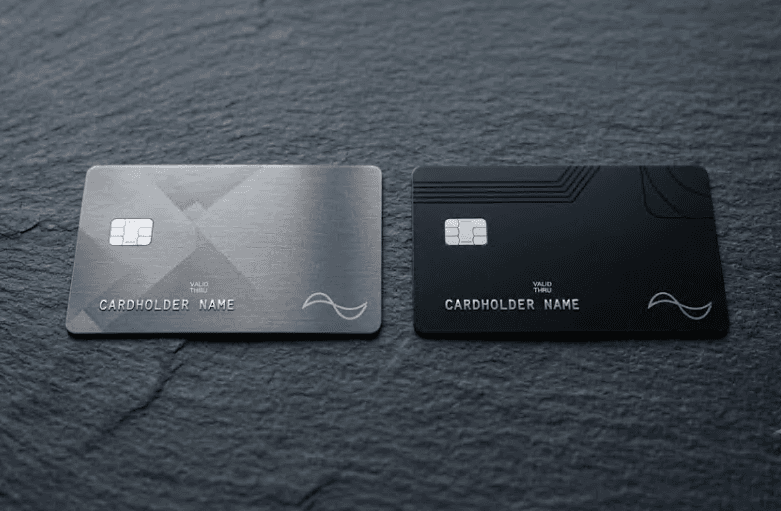
Two payment cards lying side by side on a dark surface.

A charge card and a credit card look identical in your wallet, and both let you pay now and settle later. The real difference is in what happens at the end of the cycle — and that single distinction changes how each one fits into your financial life.

The core distinction

A traditional credit card lets you carry a balance from month to month, paying interest for the privilege. A charge card generally expects the balance to be paid in full each cycle, with no option to revolve. One permits borrowing across months; the other does not.

What that means for spending limits

Because a charge card is not designed for carried balances, it often does not carry a fixed, stated credit limit in the familiar sense. Instead, spending power may flex based on the issuer's ongoing assessment. A credit card, by contrast, typically gives you a defined limit to work within.

The discipline each one assumes

A charge card assumes the discipline a credit card merely rewards — paying in full, every cycle. For someone who already does that, the absence of a revolving option is no loss at all. It simply formalizes the habit at the heart of "The grace period explained."

Where each one fits

A credit card's ability to carry a balance can be a safety valve or a trap, depending on the user. A charge card removes the option entirely, which suits a disciplined payer and ill-suits anyone who occasionally needs to spread a cost. Choose based on which describes you honestly.

Don't choose on the label alone

The terms matter more than the name. Some products blur the line, offering features of both. Read how the specific card actually behaves — the approach urged in "How to read a credit card's terms" — rather than assuming the category tells you everything.

One lets you borrow across months; the other expects to be settled each cycle. The right choice is simply the one that matches how you actually pay.

Share

Stay sharp

The weekly points brief

One sharp, no-nonsense insight on points and miles strategy each week. No spam, unsubscribe anytime.

Keep reading

Hotel keycard resting on a wooden surface beside folded paper under soft light

Wyndham Rewards Award Chart Moves to Four Tiers: 34 Percent of Hotels Now Cost More Points

Effective September 15, Wyndham Rewards replaced its three fixed free-night tiers with four. The lowest rate drops from 7,500 to 5,000 points while a new 45,000-point tier appears at the top. Independent analysis of the full hotel list shows 34 percent of properties rose in price, 22 percent fell, and 44 percent stayed the same.

Credit card beside a boarding pass and paper statement on a navy desk, illustrating the Chase Air Canada Aeroplan card fee increase and transfer bonus ending

Chase Air Canada Aeroplan Card Refresh: Annual Fee Rises From $95 to $195 at Renewals From December 1, and the 10% Ultimate Rewards Transfer Bonus Ends December 31

Chase relaunched its Aeroplan card on September 10 with automatic 25K status, a 15% Air Canada award discount, and a fee that more than doubles at renewals from December 1. The quieter loss is the 10% bonus on Ultimate Rewards transfers, which ends December 31. Here is who actually loses and what to do before each date.

Hotel key card and boarding pass placed apart on a navy desk, illustrating the end of the American Airlines and Hyatt loyalty partnership

American Airlines and Hyatt Are Ending Their Partnership: Link Accounts by November 15, Then Two Separate Deadlines for the Last Status, Free Night, and Seat Coupon Rewards

American Airlines and Hyatt announced on September 9 that their enhanced loyalty relationship will not be renewed. Linked members keep earning cross-program rewards for the rest of each program's current year: AAdvantage Loyalty Point Rewards for Hyatt through February 28, 2027, and Hyatt Milestone Rewards for American through December 31, 2026. Accounts must be linked by November 15. Here is who actually loses and what to do before each date.